
A natural alternative to store-bought cordials and syrups, which are often full of additives. This one is simple and easy to make.
Ingredients
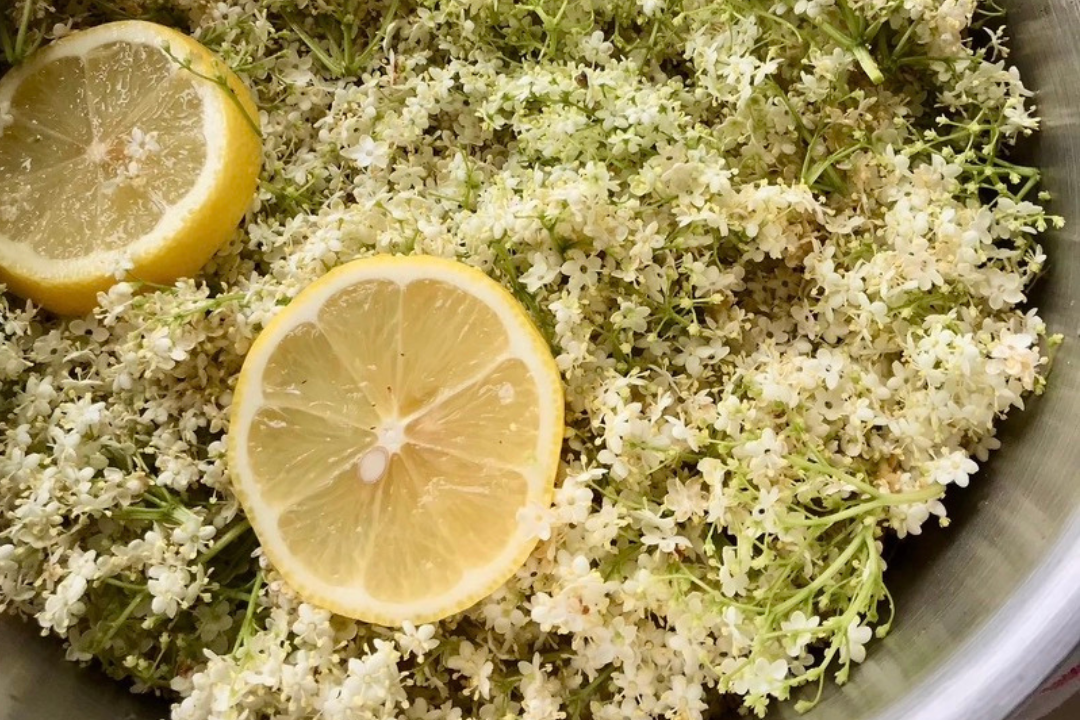
- 40–50 elderflower heads
- 2 liters water
- 2 kg (4.4 lbs) granulated sugar
- 2 organic lemons
- 50 g (about 1.8 oz) citric acid
Instructions
- Gently shake the elderflower heads to remove any insects. Avoid washing them if possible, as much of the flavor comes from the pollen.
- Bring the water to a boil and dissolve the sugar. Allow the syrup to cool slightly.
- Thinly slice the lemons and place them in a large bowl or container together with the elderflowers.
- Add the citric acid.
- Pour the sugar syrup over the flowers and lemons.
- Cover and let steep in a cool place for 3–5 days, stirring once a day.
- Strain through a fine sieve or cheesecloth.
- Pour into clean, sterilized bottles.
Storage
- In the refrigerator: about 2–3 weeks.
- In the freezer: up to 1 year.
Serving Suggestion
Dilute with cold water to taste and serve with ice, lemon slices, and fresh mint. Elderflower cordial is also delicious mixed with sparkling water or used to flavor desserts and cocktails.
You can use raw sugar (demerara sugar or light raw cane sugar) when making elderflower cordial.
Just keep in mind that:
- The flavor will be slightly richer and more caramel-like than if you use regular white sugar.
- The color will be darker, often golden or lightly amber.
- The delicate floral notes of the elderflowers may become a little less pronounced, especially if you use a darker raw sugar.
If you would like to preserve the classic pale color and clean elderflower flavor, you can use:
- 100% white sugar, or
- A combination of white sugar and raw sugar (for example, half of each).
Many people find that raw sugar gives the cordial a fuller, more natural flavor, especially when it is served diluted with still or sparkling water.
If you choose to use raw sugar, you can substitute it gram for gram for regular white sugar.